05 / 08 · built · 2026 · Hackathon prototype for BMW
Tracepoint
From customer feedback to traceable, approved product requirements: an evidence-first workspace for BMW product managers, built at the TUM.ai hackathon.
- Role
- Team of three at the TUM.ai hackathon, October 2026. I drove the product, the plan and the frontend track end to end, the map, the five-stage workspace and the CPM explainer, and the integration with the backend; a teammate owned the analyst agents and the series analysis.
- Stack
- Python · FastAPI · SQLAlchemy · PostgreSQL · OpenAI · Next.js · TypeScript · Tailwind CSS
- Links
- Live siteGitHub
8 of 8
documented BMW decisions whose effort class the engine's back-test reproduces
Source: Tracepoint, effort engine back-test (step 12 report) · as of Oct 2026
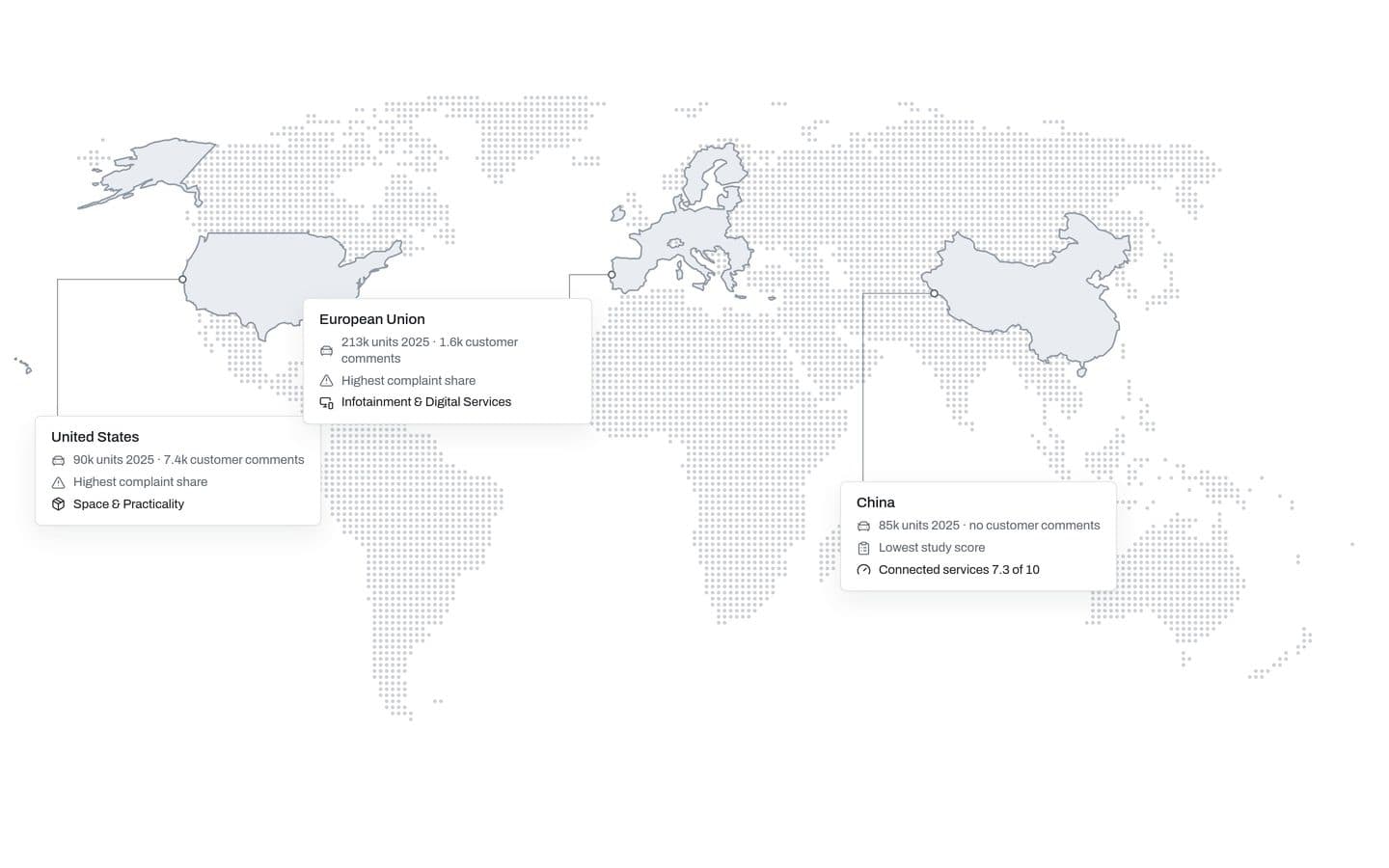
Landing: three markets with 2025 units, comment counts and the highest complaint share 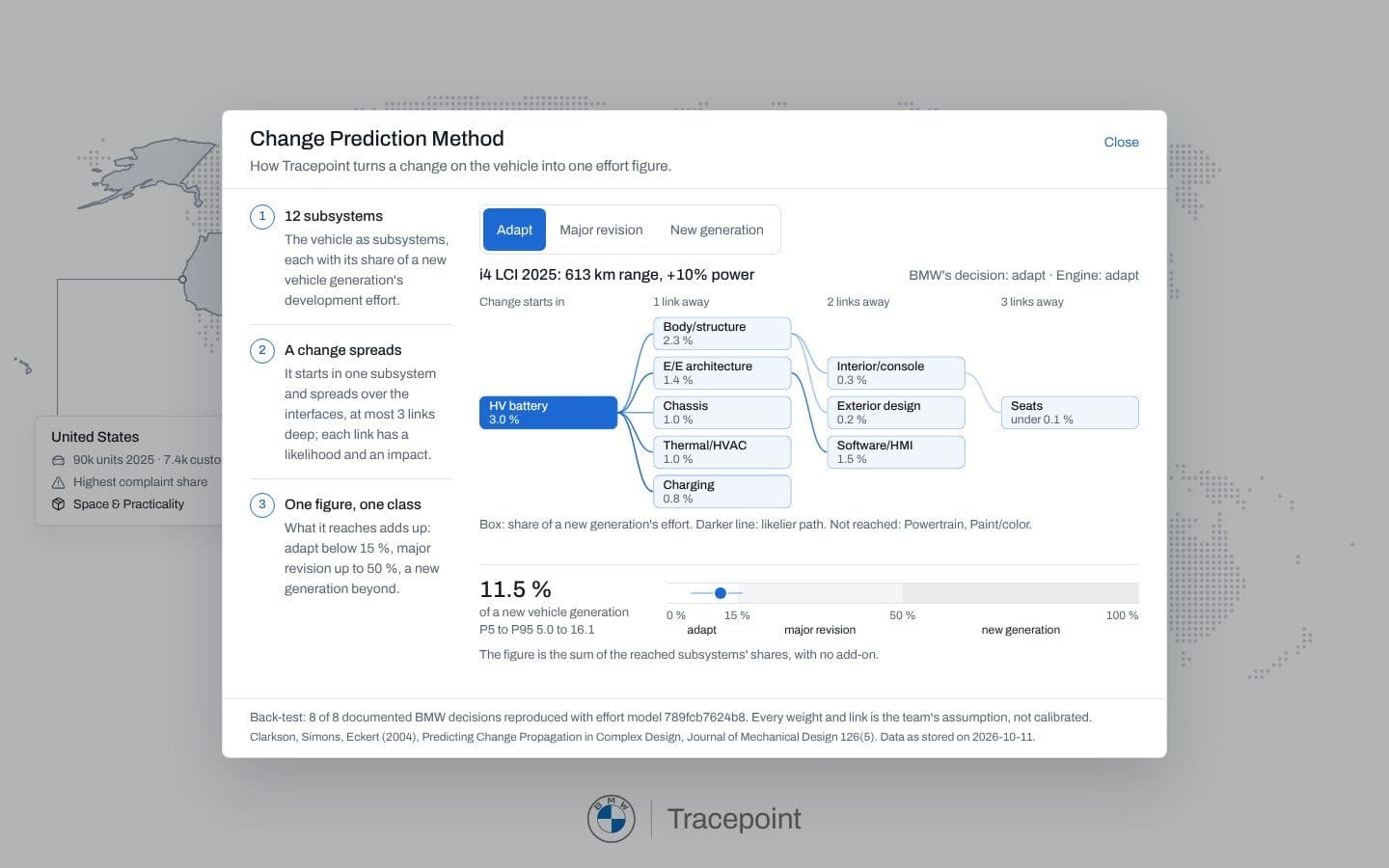
The CPM explainer: twelve subsystems, propagation and a worked example from the back-test 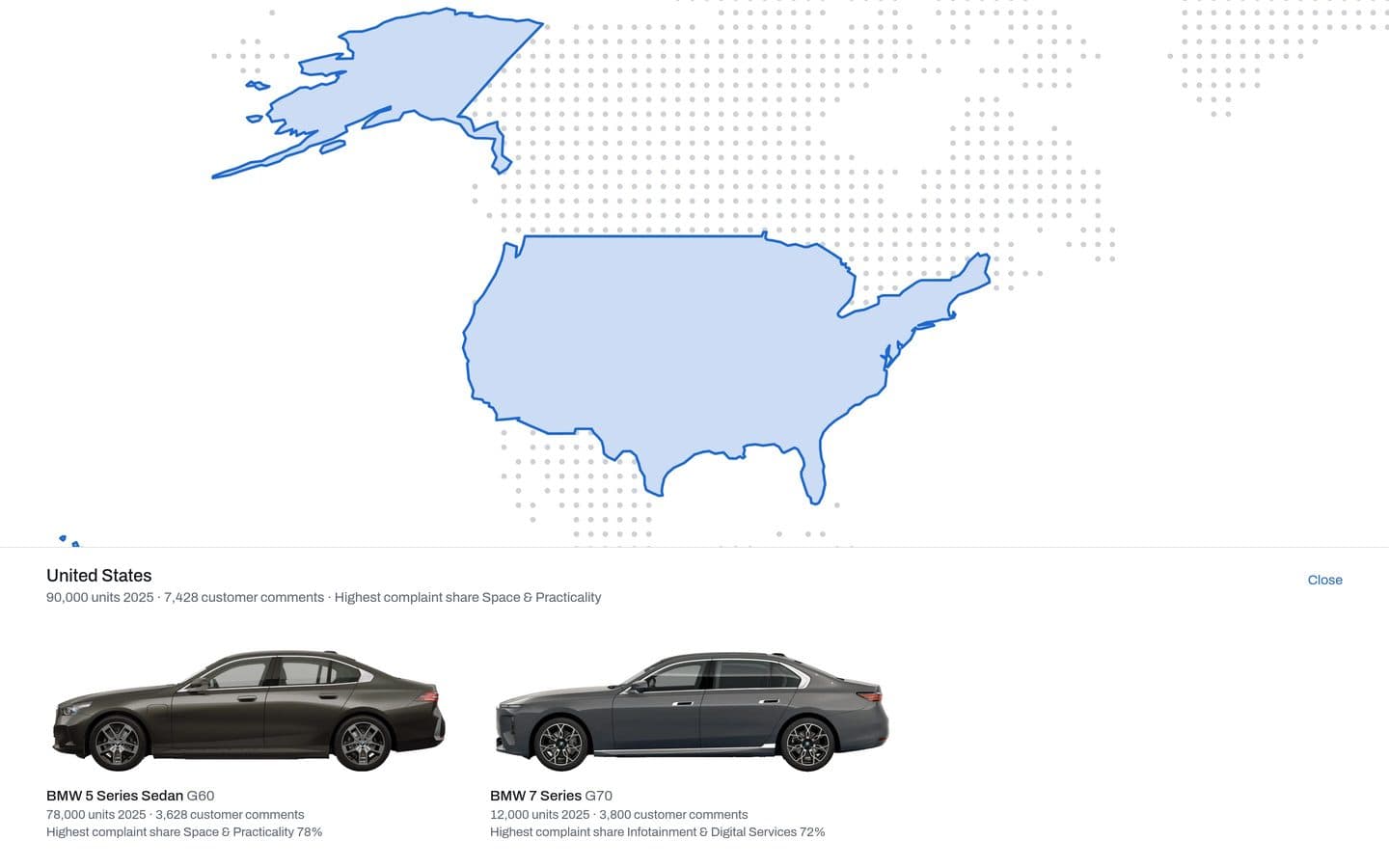
A market magnified: the vehicles sold there with their figures 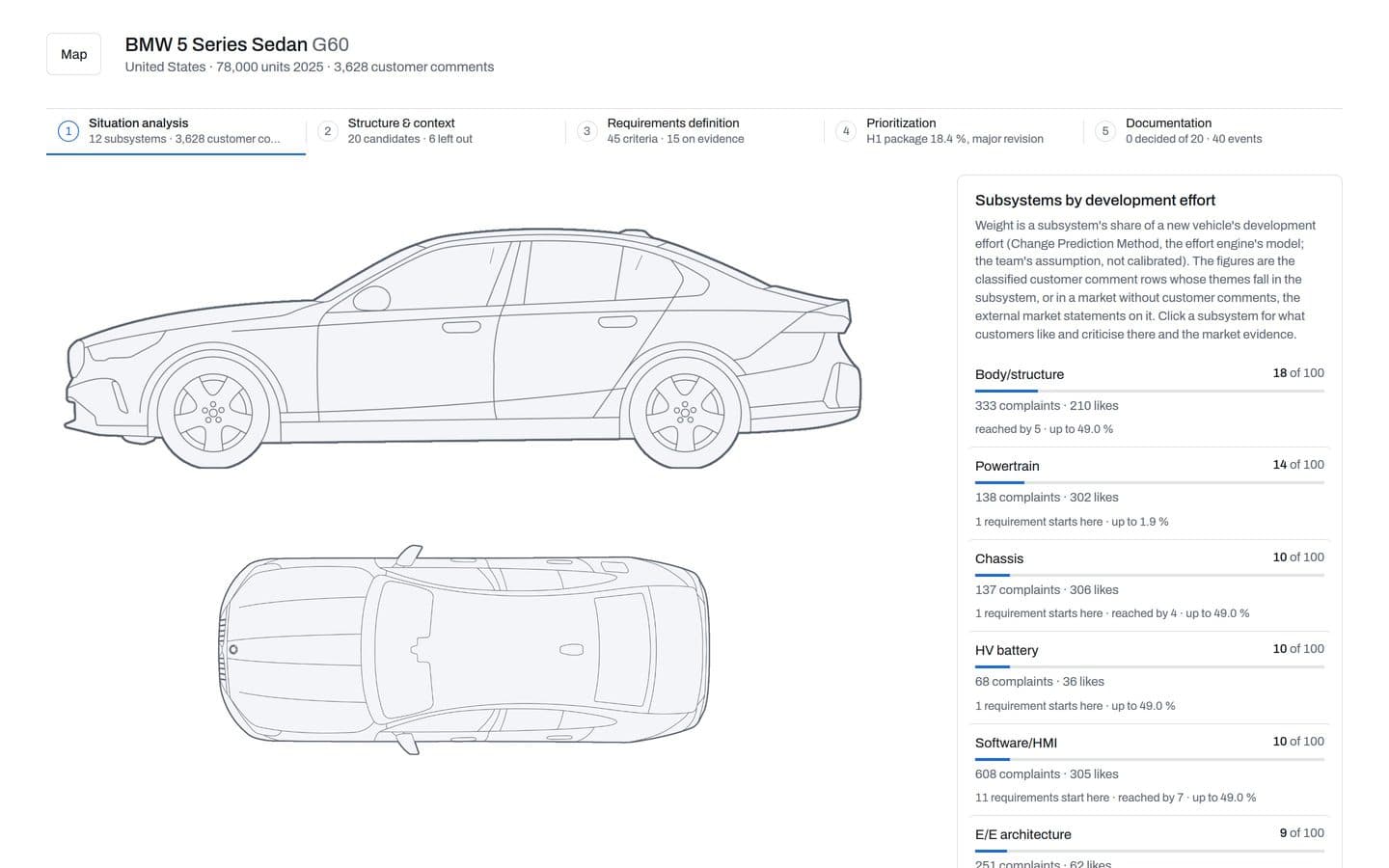
Stage 1: the vehicle as a technical sketch beside its twelve CPM subsystems 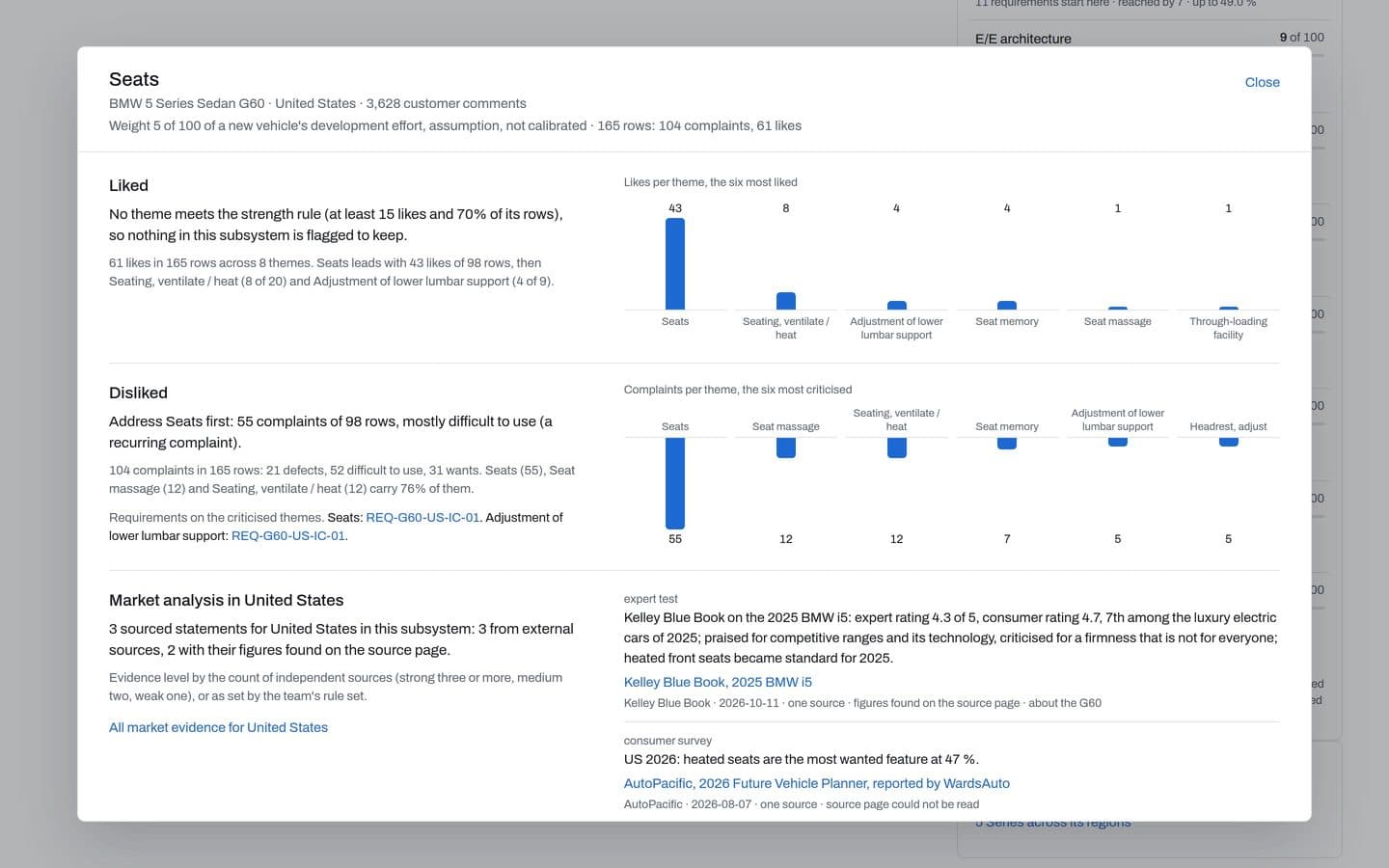
A subsystem dialog: likes, complaints and market evidence for seats 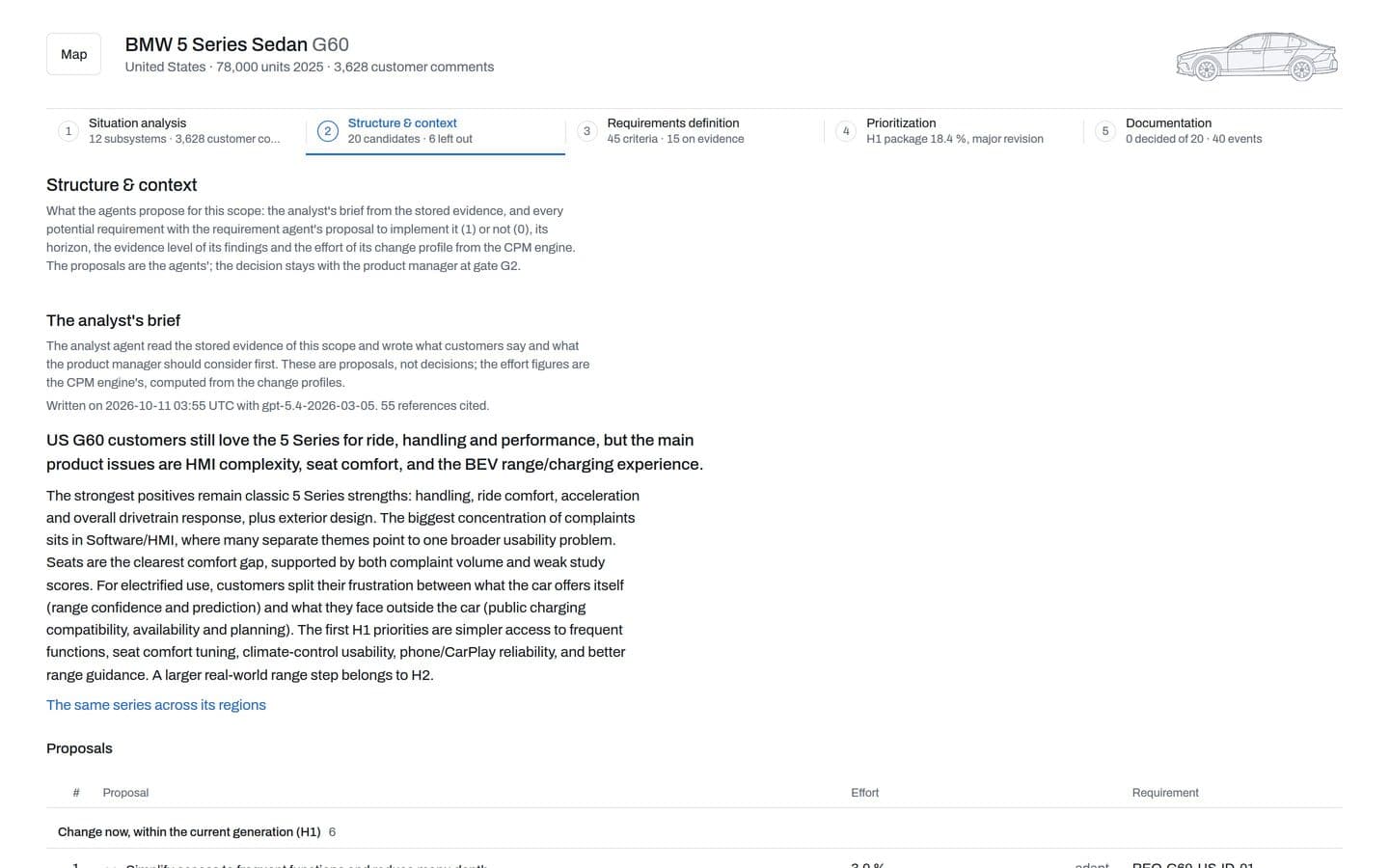
Stage 2: the analyst's brief and every candidate requirement with its proposal 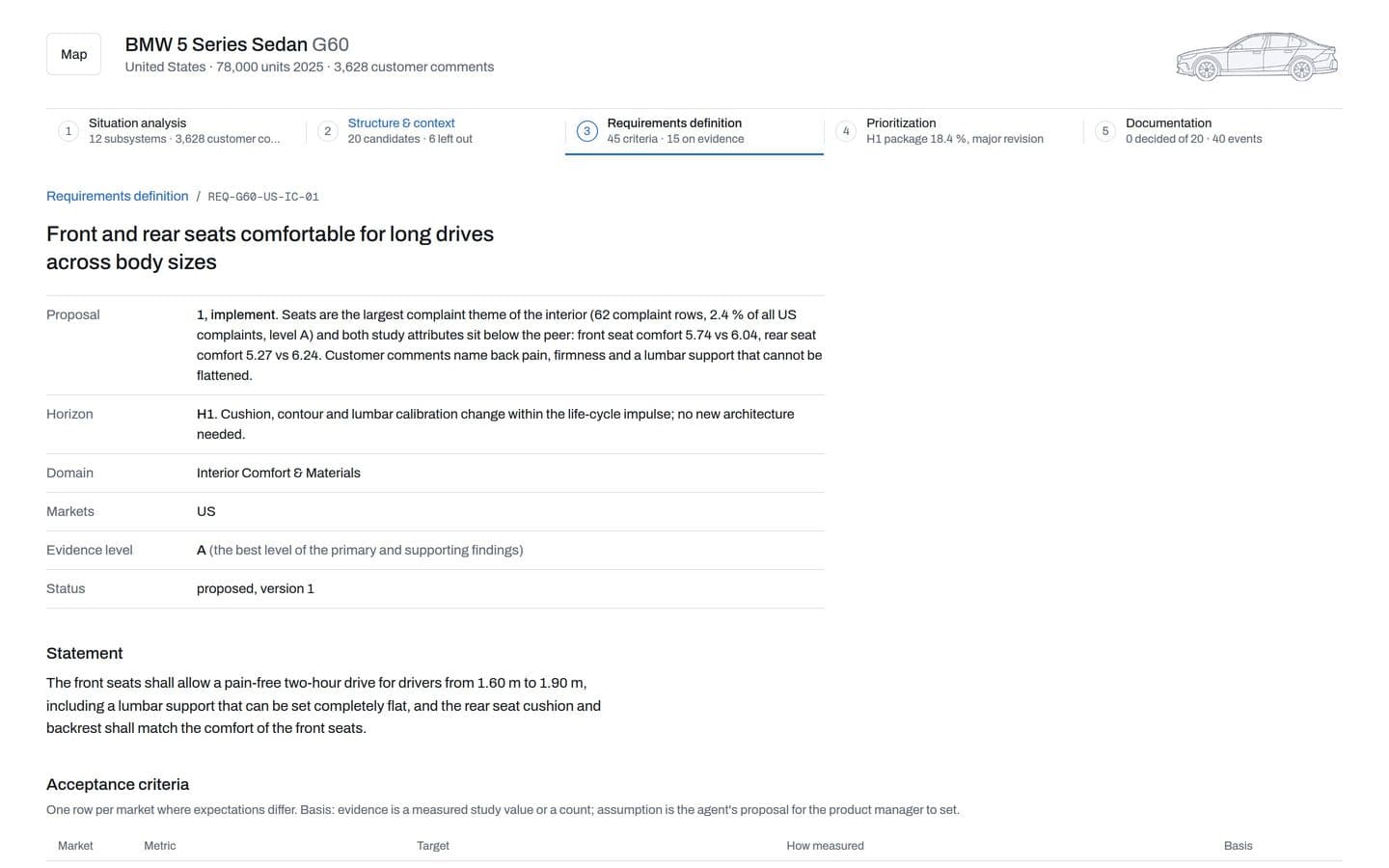
Stage 3: one requirement with acceptance criteria, evidence and effort 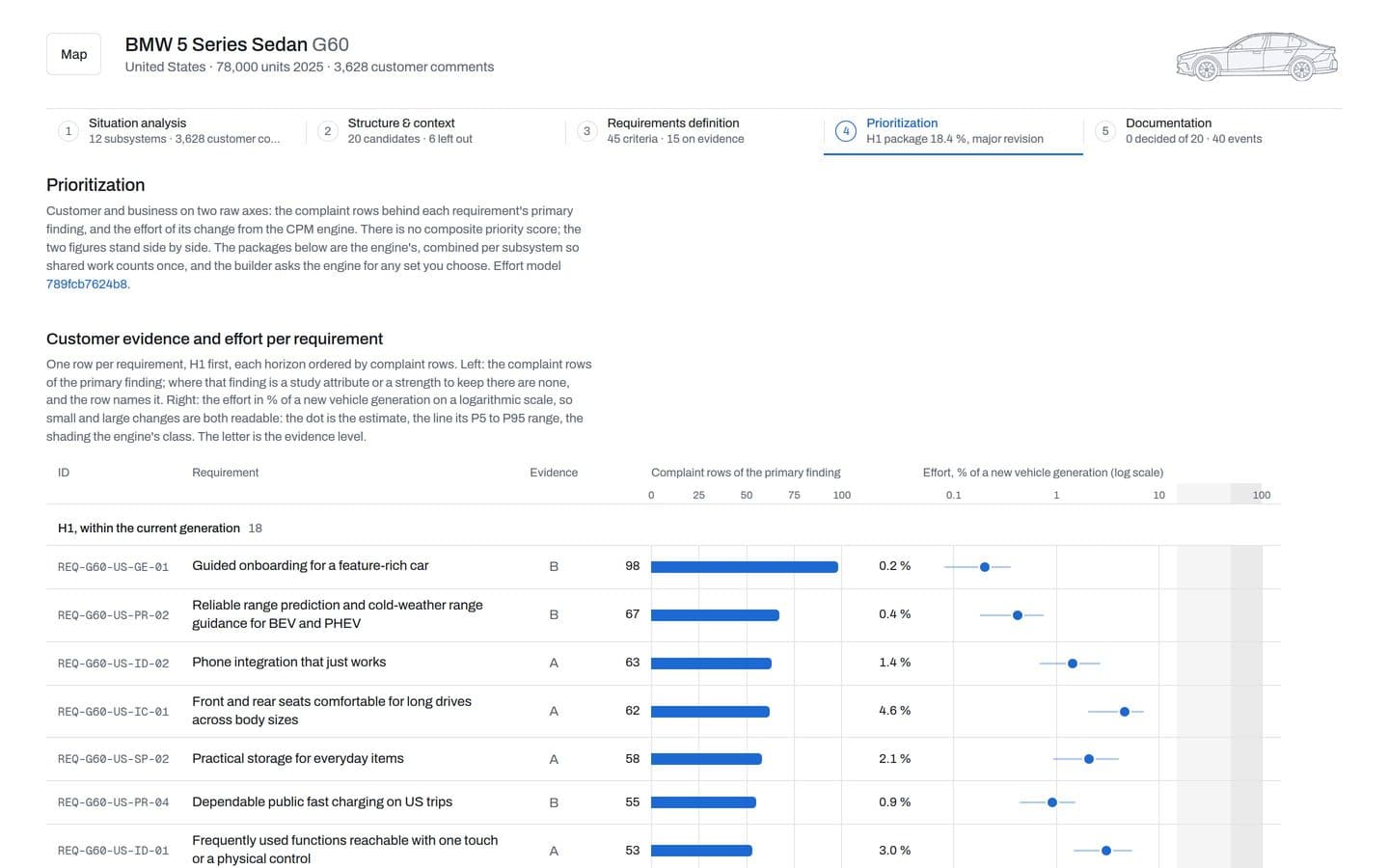
Stage 4: customer evidence and effort side by side 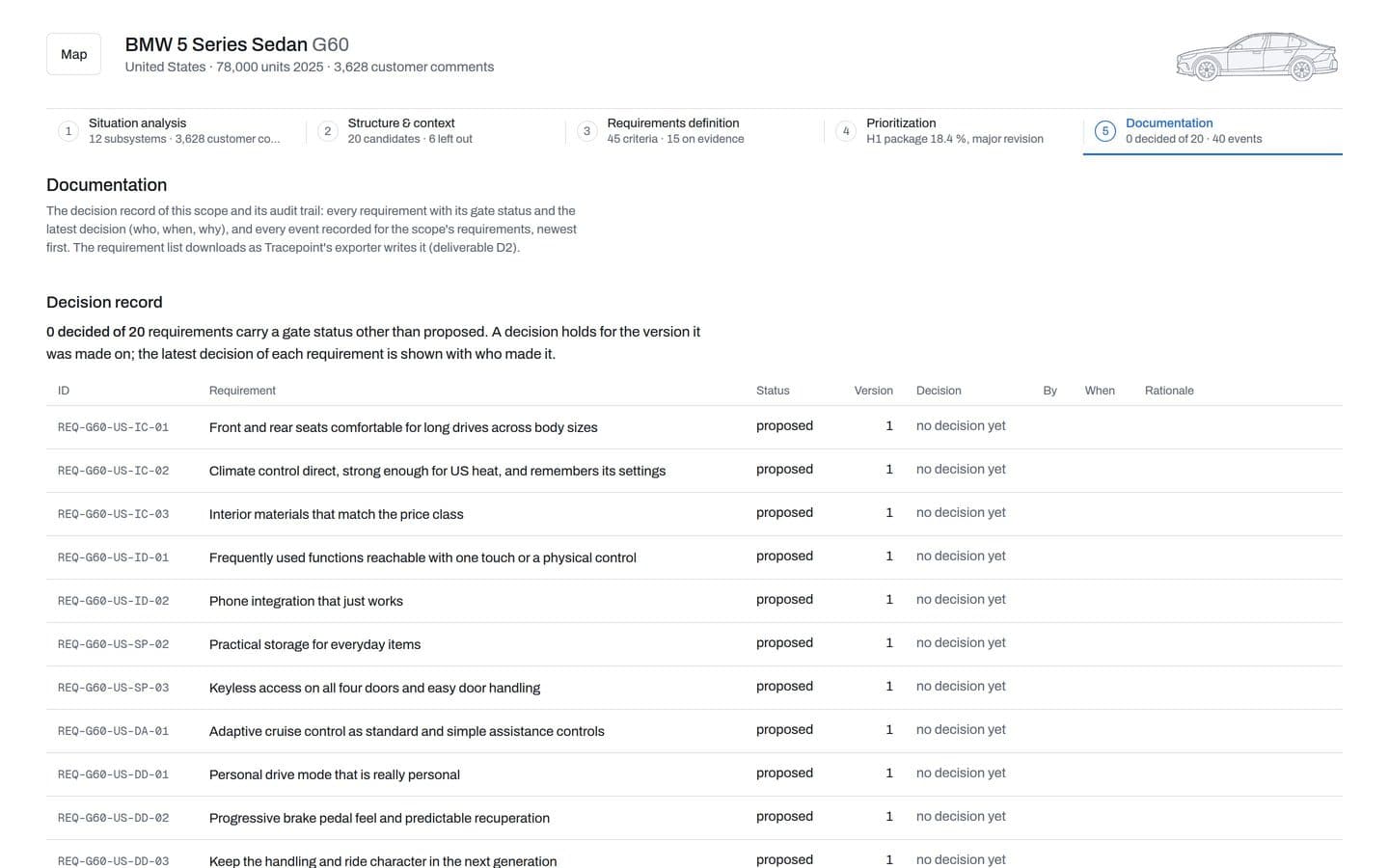
Stage 5: the decision record and the audit trail
The challenge, set by BMW for the TUM.ai hackathon: take heterogeneous inputs about a vehicle, thousands of free-text customer comments, customer studies, sales figures, equipment lists and public sources, and derive clear, prioritised product requirements with a product manager in the loop and a complete audit trail. Tracepoint answers it for four vehicles (1 Series, 5 Series, 5 Series Long Wheelbase, 7 Series) and three markets (EU, US, China).
Everything starts in the evidence store. Every row, a customer comment, a study metric, a sales figure, an option-list line, a page of the Group Report, carries a locator back to its file, sheet, row, page or URL. The 2,438 rows the source files left unclassified are labelled by an LLM against BMW's own taxonomy and checked blind against a human sample. Findings are extracted deterministically, requirements are versioned and linked to their findings, and scoring and effort are pure functions of the stored evidence, so a re-run gives the same answer.
The effort engine applies the Change Prediction Method: a vehicle as twelve subsystems with their share of a new vehicle's development effort, a change spreading over the interfaces up to three links deep, and a P5 to P95 range on the result. Back-tested against eight documented BMW decisions, it reproduces the class of all eight.
The product manager works in a Next.js workspace: a dotted world map with the three markets, a technical sketch of the car beside its subsystems, the analyst agent's brief, every candidate requirement with the agent's proposal and its effort, prioritisation with customer evidence and effort side by side, and finally the decision record with the audit trail and the exportable requirement list. Every figure on screen comes from the backend; the app adds nothing of its own.